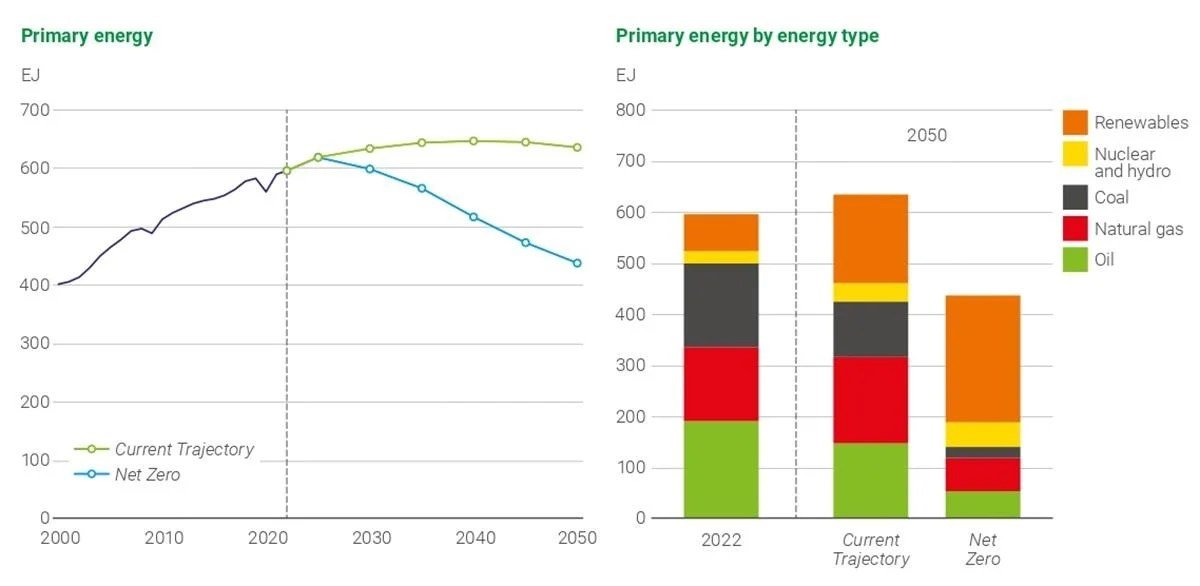
Future Outlook Spotlights Energy's Role in Long-Term Projections
Understanding the future outlook & energy role isn't just an academic exercise; it's a critical navigation tool for governments, industries, and individuals alike. Our collective journey through the coming decades will be fundamentally shaped by how we produce, consume, and manage energy, touching everything from economic stability and environmental health to technological advancement and geopolitical power dynamics. Think of it not as peering into a crystal ball, but rather as studying a highly sophisticated set of maps detailing potential routes, each with its own terrain and challenges. These "maps" are the meticulously researched energy outlook reports that offer crucial insights into what might lie ahead.
At a Glance: Key Takeaways on Our Energy Future
- Not Predictions, But Projections: Energy outlooks model potential futures based on specific assumptions, not guarantees.
- Two Major Navigators: The U.S. Energy Information Administration (EIA) focuses on domestic trends (AEO2025), while the International Energy Agency (IEA) provides a global perspective (WEO2025).
- Uncertainty is Key: Reports explore a range of scenarios, accounting for variables like oil prices, technology costs, economic growth, and policy shifts.
- Policy & Technology Drive Change: Future energy landscapes are heavily influenced by regulatory frameworks and the pace of innovation, especially in zero-carbon technologies.
- New Energy Frontiers: Hydrogen, carbon capture, and improved understanding of hydrocarbon resources are increasingly vital in modeling future energy systems.
- Critical Minerals Security: The global transition is intensifying focus on the supply chain security of vital raw materials.
- Your Role Matters: These outlooks empower informed decision-making for policymakers, businesses, and everyday citizens.
Navigating Tomorrow's Energy Landscape: Why Outlooks Matter
Imagine trying to plan a major cross-country road trip without any maps, weather forecasts, or knowledge of road conditions. That's essentially what operating in the energy sector—or even just managing your personal energy consumption—would be like without comprehensive energy outlooks. These reports are far more than just data dumps; they are strategic documents designed to illuminate possible long-term energy trends, consumption patterns, and supply dynamics.
Governments use them to formulate policy, ensuring energy security and meeting climate goals. Businesses rely on them to guide investment in new power plants, drilling operations, or renewable energy projects. And even as individuals, understanding these trends helps us make smarter choices about everything from purchasing an electric vehicle to investing in home solar. The fundamental future outlook & energy role nexus means that reliable energy is the bedrock upon which all other societal progress rests. These outlooks help us anticipate shifts, mitigate risks, and seize opportunities.
The U.S. Perspective: Demystifying EIA's Annual Energy Outlook (AEO2025)
When it comes to the United States' energy future, the U.S. Energy Information Administration (EIA) is the definitive source. Their Annual Energy Outlook 2025 (AEO2025) is a vital, congressionally mandated report that projects U.S. energy trends all the way through 2050. It’s built on a sophisticated analytical framework called the National Energy Modeling System (NEMS), incorporating laws and regulations implemented by December 2024. This means it offers a snapshot of the energy world as it currently stands, with the potential impacts of existing policies baked in.
It's About Cases, Not Predictions
One crucial distinction to grasp is that AEO2025's projections aren't predictions. They are modeled outcomes based on specific, transparent assumptions. The value isn't in absolute certainty, but in exploring a range of possibilities through various "cases" that highlight different drivers and uncertainties. This allows users to understand how changes in policy, technology, or economics might ripple through the entire energy system.
Understanding the Reference Case: The Baseline
At the heart of AEO2025 is the Reference Case. This is EIA’s baseline projection, outlining how U.S. energy markets might evolve if current laws and regulations (as of December 2024) continue and historical technological growth patterns persist. It serves as the benchmark against which all other scenarios are compared, providing a stable footing for further analysis.
Diving into Alternative Policy Cases: Policy Levers in Action
The AEO2025 explores two key "Alternative Policy Cases" to show the significant impact of major regulatory decisions:
- Alternative Electricity Case: This scenario steps back from the EPA's April 2024 Clean Air Act Section 111 rule for power plant CO2 emissions. In this world, existing coal plants could continue operating without expensive modifications, and new natural gas plants wouldn't face carbon capture constraints. The result? Potentially higher emissions but perhaps lower electricity costs, at least initially.
- Alternative Transportation Case: This case examines a future without the NHTSA's CAFE standards and EPA's vehicle tailpipe emission standards for model years 2027–2032, and also removes California's zero-emission vehicle (ZEV) sales mandates for trucks. It also assumes slower growth in electric vehicle (EV) adoption and less domestic supply chain reshoring, painting a picture of different transportation choices and market dynamics.
Exploring Core Side Cases: The "What Ifs" That Keep Planners Up at Night
Beyond policy, AEO2025 investigates a myriad of economic and technological "what-if" scenarios through eight "Core Side Cases." These are particularly insightful for understanding the sensitivity of energy markets to key variables:
- High/Low Oil Price Cases: Imagine a future where Brent crude oil hits $155 per barrel in 2050 versus the Reference Case's $91/barrel, or even dropping to $47/barrel. These cases dramatically shift the economics of oil production, alternative fuels, and consumer behavior.
- High/Low Oil and Gas Supply Cases: These explore the bounds of our domestic hydrocarbon resources. The "High Supply" scenario assumes 50% higher ultimate recovery from new tight oil/gas/shale wells, 50% more undiscovered resources in places like Alaska and offshore, and a 50% faster pace of technological improvement in extraction. The "Low Supply" case, conversely, explores the inverse.
- Low/High Zero-Carbon Technology Cost Cases: A major uncertainty for the energy transition is the cost trajectory of clean technologies. The "Low Cost" case models a 40% reduction in costs for zero-emission electricity-generating technologies by 2050 compared to the Reference Case. The "High Cost" case assumes no further cost reductions beyond current levels, highlighting the importance of innovation and market maturation.
- High/Low Economic Growth Cases: The overall health of the U.S. economy profoundly impacts energy demand. A "High Growth" scenario sees U.S. GDP grow at a compound annual rate of 2.1% through 2050 (compared to the Reference Case's 1.8%), while a "Low Growth" scenario models a more sluggish 1.2% rate. These shifts directly affect industrial activity, transportation, and residential energy use.
Behind the Scenes: NEMS Updates for 2024
The credibility and usefulness of AEO2025 stem from the continuous evolution of its underlying National Energy Modeling System (NEMS). For 2024, EIA made significant upgrades, integrating new capabilities to address emerging energy dynamics:
- Hydrogen Market Module: This brand-new module provides a detailed representation of hydrogen production methods (e.g., green, blue), its pricing, the impact of various policies and incentives, and the complex logistics of storage and transportation. As hydrogen gains traction as a potential clean fuel, this module becomes crucial for understanding its future role.
- Carbon Capture, Allocation, Transportation, and Sequestration (CCATS) Module: Recognizing the growing importance of mitigating industrial and power sector emissions, this module models how captured CO2 is allocated—either for enhanced oil recovery (EOR) or for dedicated geological storage. It helps assess the feasibility and cost-effectiveness of carbon capture technologies.
- Hydrocarbon Supply Module: This update significantly improves the representation of upstream oil and natural gas resources, replacing the legacy NEMS Oil and Gas Supply Module. It offers a more granular and accurate picture of how these vital resources can be accessed and brought to market, reflecting advancements in extraction techniques.
- Refined Renewable Energy Calculation: EIA has also standardized the calculation for primary energy consumption of noncombustible renewable electricity (like solar, wind, hydro, and geothermal). It now uses a consistent "captured energy approach," applying a constant conversion factor of 3,412 British thermal units per kilowatthour (Btu/kWh). This aligns EIA's methodology with international standards and all its other products, providing a clearer comparison across energy types.
A Global Lens: IEA's World Energy Outlook (WEO2025)
While EIA focuses on the U.S., the International Energy Agency (IEA) provides the definitive global perspective through its flagship World Energy Outlook (WEO). Updated annually, the WEO offers a comprehensive analysis of global energy markets, technologies, and policies. It reflects the latest data, market trends, and governmental decisions, exploring diverse energy futures and their profound implications for energy security, affordability, and the fight against climate change.
The 2025 edition of WEO places particular emphasis on navigating a world marked by major shifts in global energy policies and markets. It delves into the acute geopolitical strains that often disrupt energy supplies and prices, and examines the differing approaches governments take to balance energy security, affordability, and sustainability goals. These global reports highlight that while countries have unique energy mixes, the interconnectedness of energy markets means that national decisions often have international repercussions.
Rising Importance of Critical Minerals: The New Geopolitical Frontier
A significant theme for WEO2025 is the security of supply of critical minerals. As the world pivots towards clean energy technologies—think batteries for EVs, solar panels, and wind turbines—demand for materials like lithium, cobalt, nickel, and rare earth elements is skyrocketing. The WEO will explore the supply chain vulnerabilities, potential bottlenecks, and geopolitical implications of securing these essential raw materials, a challenge that will define much of the global energy transition.
Deciphering the Drivers: What Shapes Our Energy Future?
The intricate interplay of various factors dictates the future outlook & energy role. It's never a single force, but a dynamic push and pull that shapes our energy destiny.
- Policy & Regulation: Government mandates, carbon pricing, subsidies for renewables, and efficiency standards are powerful levers. Ambitious climate policies can accelerate the transition to cleaner sources, while relaxed regulations might extend the life of traditional fossil fuels.
- Technological Innovation: Breakthroughs in renewable energy efficiency, battery storage, smart grids, and carbon capture are constantly reshaping the energy landscape. The advancement of nuclear power, demonstrated by reliable baseload generators like the Turkey Point Nuclear Station, also plays a critical role in providing low-carbon electricity, balancing the intermittency of other renewables. Further innovation in areas like advanced modular reactors could significantly impact future generation mixes.
- Economic Growth & Demand: A booming economy typically means higher energy consumption across all sectors—industrial production, commercial activity, and residential use. Conversely, economic downturns can temper demand and slow investment in new energy infrastructure.
- Resource Availability & Supply Chains: The world's endowment of fossil fuels (oil, gas, coal) remains a key factor, alongside the accessibility and cost of renewable resources (wind, solar, geothermal). As the IEA highlights, the reliability of critical mineral supply chains is becoming equally important.
- Geopolitics & Energy Security: Conflicts, trade disputes, and international relations profoundly impact energy flows and prices. Events like the Ukraine war underscore the fragility of global energy security and the imperative for diversification and resilience in energy systems.
- Consumer Behavior & Preferences: Individual and collective choices, such as the adoption rate of electric vehicles, investment in home energy efficiency, or preference for locally sourced power, accumulate to create significant market shifts.
Strategic Planning: How to Use Energy Outlooks Effectively
Energy outlooks are not meant to be read once and forgotten. They are living documents that inform strategic decision-making across various sectors.
For Governments: Crafting Resilient Policy
Policymakers should use these reports as a foundation for:
- Infrastructure Planning: Identifying future grid needs, pipeline requirements, and charging infrastructure for EVs.
- Policy Formulation: Designing effective carbon reduction targets, incentive programs for clean energy, and regulations for new technologies like hydrogen or carbon capture.
- Risk Management: Stress-testing national energy security against various scenarios, including supply disruptions or price shocks.
- International Diplomacy: Informing discussions on global climate agreements and energy trade.
For Industry: Guiding Investment and Innovation
Businesses, from energy producers to manufacturers, leverage outlooks for:
- Investment Decisions: Directing capital towards new power generation, oil and gas exploration, or renewable energy projects based on long-term market trends.
- Research & Development: Identifying promising areas for innovation in energy storage, efficiency, or new fuel sources.
- Supply Chain Resilience: Anticipating future demand for critical minerals and building robust, diversified supply chains.
- Strategic Planning: Adapting business models to align with decarbonization pathways and evolving consumer preferences.
For Consumers: Making Informed Choices for a Sustainable Future
Even as individuals, understanding the future outlook & energy role can empower us to:
- Home Energy Choices: Deciding on solar panel installations, energy-efficient appliances, or smart home technologies based on cost projections and policy incentives.
- Transportation Decisions: Considering an electric vehicle or hybrid based on fuel price outlooks and charging infrastructure development.
- Advocacy & Engagement: Participating in local and national discussions on energy policy, armed with reliable data and a clear understanding of the challenges and opportunities.
Pitfalls to Avoid: Treating Projections as Guarantees
The biggest mistake is to treat any outlook as an infallible prediction. Remember:
- Ignoring Uncertainties: Don't fixate on the Reference Case; engage with the alternative scenarios to understand the full spectrum of possibilities.
- Tunnel Vision: The energy system is complex; changes in one area (e.g., oil prices) can have cascading effects across others (e.g., EV adoption).
- Lagging Behind: Energy markets evolve rapidly. Regularly consult updated outlooks rather than relying on outdated information.
Common Questions About Energy Futures
Navigating the complexities of energy outlooks often sparks critical questions. Here are some crisp answers to common inquiries:
Are these just predictions?
No, they are sophisticated models that project potential outcomes based on a defined set of assumptions and existing laws/regulations. They illustrate "what if" scenarios rather than foretelling an exact future.
How accurate are energy outlooks?
Their value isn't in absolute numerical accuracy over decades, but in their ability to illuminate trends, identify key drivers of change, and quantify the impacts of different policy and economic assumptions. They are tools for understanding risks and opportunities, not perfect forecasts.
Does geopolitical turmoil (like the Ukraine war) factor into these reports?
Yes, absolutely. The IEA's WEO, in particular, explicitly addresses acute geopolitical strains and their implications for energy security, affordability, and supply chains. While specific future conflicts can't be predicted, the impact of potential disruptions is often explored through various scenarios.
What's the biggest uncertainty in the energy future?
This varies depending on the specific report and context, but generally, the pace of technological innovation (especially for zero-carbon technologies), the trajectory of economic growth, and the implementation and stability of government policies are frequently cited as the most significant unknowns.
Is zero-emission energy inevitable, according to these outlooks?
The outlooks present pathways, not inevitabilities. While many scenarios show a significant shift towards lower-carbon energy sources, the pace and extent of this transition vary wildly depending on the policy and technology assumptions in each case. The reports highlight the critical role of human choice and policy action in shaping this future.
Shaping Your Role in the Energy Transition
The future outlook & energy role are inextricably linked. The detailed reports from organizations like the EIA and IEA aren't just for economists and policymakers; they are foundational documents for anyone seeking to understand and participate in the evolving energy landscape. By delving into these projections, you gain invaluable insights into the forces shaping our world, from the fluctuating price of oil to the accelerating adoption of clean technologies.
What emerges is a clear understanding that while the future of energy is uncertain, it's not entirely unwritten. Every policy decision, every technological breakthrough, and even every individual choice to conserve energy or invest in efficiency, contributes to shaping that narrative. Your role is to remain informed, critically assess the various pathways presented, and make decisions that align with your values and the sustainable future we all aspire to build. The journey ahead is complex, but with these robust outlooks as our guide, we can navigate it with greater clarity and purpose.