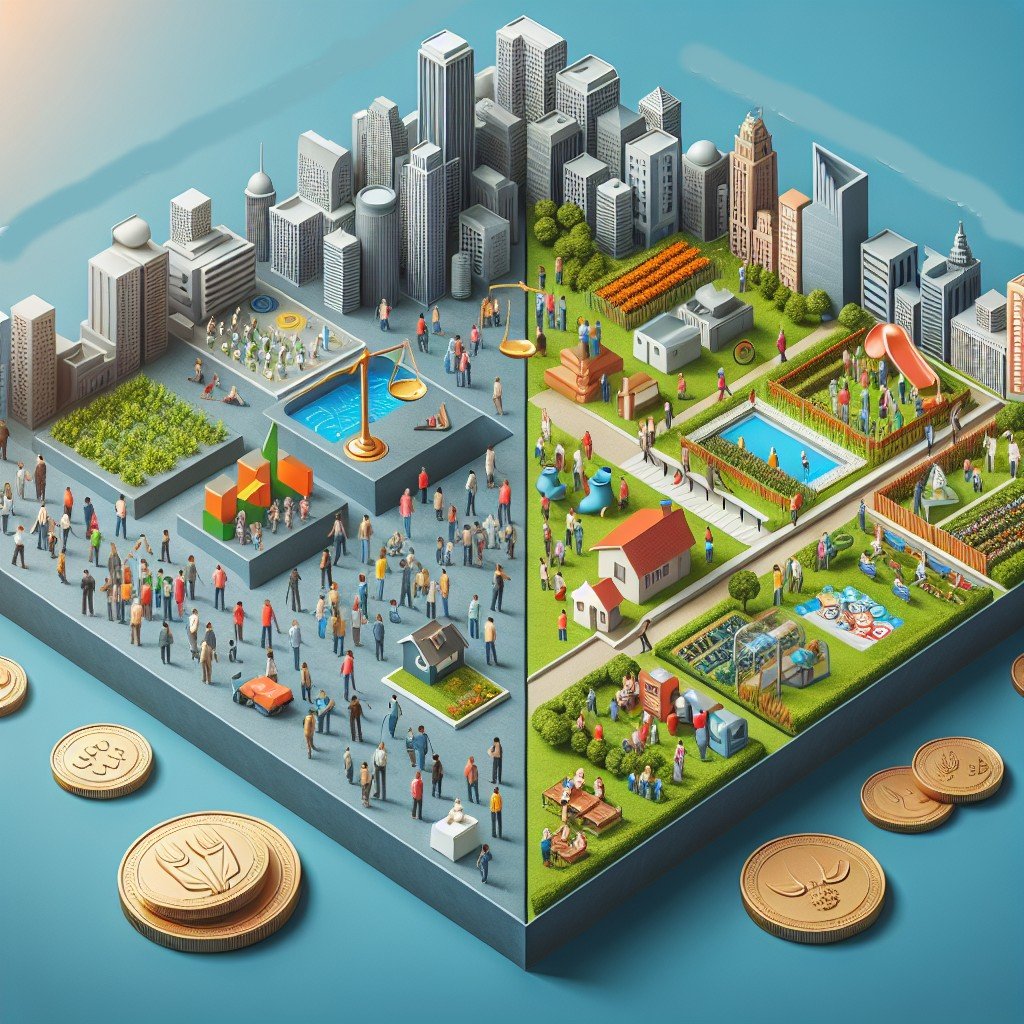
When we talk about true progress, the kind that genuinely lifts lives and strengthens neighborhoods, the conversation must start with Economic & Community Impact. For too long, "development" has been a top-down affair, with grand plans hatched in boardrooms far from the streets they claim to improve. The result? Projects that often overlook local needs, creating displacement, fueling uncertainty, and sometimes even deepening poverty.
But what if the solutions didn't come from the top, but from the ground up? What if communities themselves held the blueprints for their own prosperity? That's the powerful premise behind local-led development, a movement rooted in the belief that sustainable economic growth is inextricably linked to the unique aspirations, experiences, and vibrancy of the people who call a place home.
At a Glance: Unpacking Local-Led Economic & Community Impact
- Community First: Local-led development prioritizes the unique needs and aspirations of residents, rather than imposing external solutions.
- Holistic Approach: It integrates efforts across workforce development, small business support, real estate investment, cultural amplification, and civic engagement.
- Shared Vision: Brings together residents, businesses, and local leaders to create a unified economic action plan.
- Strategic Funding: Attracts diverse funding and opportunities by presenting a coordinated, community-driven agenda.
- Tangible Benefits: Leads to job creation, increased property values, stronger local businesses, and enhanced community well-being.
- Real-World Success: Proven by examples like LISC's CCEI model and established community development initiatives worldwide.
Beyond the Boardroom: The Case for Community-Centered Economic Inclusion
The traditional approach to economic development often operates on a "trickle-down" theory, assuming that large-scale investments or corporate relocations will automatically benefit everyone. In practice, this often creates shiny new districts that stand in stark contrast to neglected neighborhoods just a few blocks away. It leaves residents feeling disenfranchised, their voices unheard, and their histories erased.
Recognizing this critical gap, organizations like LISC (Local Initiatives Support Corporation) have championed a different path: Community-Centered Economic Inclusion (CCEI). Co-developed with The Brookings Institution’s Bass Center for Transformative Placemaking, CCEI is a powerful framework that flips the script. Instead of asking what a community needs from the outside, it asks what a community wants for itself, building on its inherent strengths and distinctive character.
LISC's CCEI: A Blueprint for Ground-Up Prosperity
The CCEI model is more than just a philosophy; it’s a practical methodology for fostering genuine Economic & Community Impact. It intentionally brings together local residents, business owners, city officials, and regional stakeholders to forge a shared economic action plan. This collaborative approach doesn't just feel good; it's strategically smart, attracting more diverse funding and opportunities than fragmented, siloed efforts ever could.
The core of CCEI programming focuses on several key areas, each designed to create a ripple effect of positive change:
- Workforce Development That Connects: Expanding training and skill-building opportunities directly linked to growing regional employment sectors. This means equipping residents with the skills for jobs that actually exist and pay well in their local market.
- Empowering Small Businesses: Providing critical resources, technical assistance, and robust support networks for local small businesses. These aren't just storefronts; they're the lifeblood of a neighborhood, creating jobs and preserving local character.
- Investing in Local Real Estate: Thoughtfully developing and rehabilitating local properties to foster community vitality. This can mean affordable housing, vibrant commercial spaces, or cultural hubs that reflect and serve the community.
- Amplifying Distinctive Culture: Recognizing and investing in the unique cultural assets that make a community special. This isn't about gentrification; it's about celebrating and strengthening the identity that draws people together and attracts beneficial attention.
- Strengthening Civic Infrastructure: Building robust networks for inclusive community engagement and investment. This ensures that residents have genuine platforms to participate in decision-making and that their voices are continuously heard throughout the process.
CCEI operates on place-based strategies, acknowledging that every community has its own unique realities, strengths, and challenges. It's about leveraging those strengths, coordinating diverse funding streams, and intentionally connecting local economies to the broader regional landscape. The model empowers communities to craft a coordinated agenda, attract capital for their priority projects, and set clear economic equity goals through an advisory group of local residents, business owners, and leaders. Over a three-year implementation cycle, partners work to achieve these goals, measure impact, and maintain accountability, all while being supported by LISC through peer learning, training, market connections, and essential financial resources.
Real-World Wins: CCEI in Action
The effectiveness of community-centered approaches isn't just theoretical; it's demonstrated through tangible results:
- Detroit: Through the CCEI process, local community-based organizations received nearly $600,000 in capacity-building grants, significantly strengthening their ability to serve their neighborhoods. The initiative also successfully organized a new business association, providing a unified voice and support system for local entrepreneurs.
- Los Angeles: During the challenging times of the COVID-19 pandemic, CCEI partners acted swiftly. They delivered over $5 million in grants and crucial technical assistance to underserved small businesses. This support helped businesses expand their digital capacities, adapt to new market conditions, and crucially, retain legacy businesses that are often the backbone of historic neighborhoods.
The Broader Landscape: Community Development's Enduring Impact on Local Economies
While LISC's CCEI offers a focused framework, it aligns with the broader, long-standing discipline of Community Development (CD). CD is a foundational strategy for fostering sustainable growth in local economies. It's about empowering residents and stakeholders to actively shape their own future through coordinated efforts across critical areas like housing, education, and infrastructure.
Community development encompasses a wide range of activities: building affordable housing, creating local job opportunities, and enhancing public services. By fostering deep community engagement, CD directly addresses inequities, stimulates inclusive economic growth, and improves overall social well-being. When done right, CD creates an upward economic spiral: thriving local businesses, increased property values that benefit homeowners, and new investments that flow back into the community.
The Tangible Economic Dividends of Community Development
The economic benefits of robust community development are profound and far-reaching:
- Job Creation: Consider construction projects – affordable housing, infrastructure upgrades, new community centers. These efforts immediately generate employment, providing direct income to residents and stimulating economic activity across related sectors. This initial boost can then cascade into further growth.
- Attracting New Businesses & Investment: When a community invests in itself – improving infrastructure, enhancing public safety, revitalizing public spaces – it becomes a more attractive place to live and work. This magnetism draws new businesses, which in turn increases local tax revenues that can be reinvested into further community improvements. Think of it as a positive feedback loop.
- Economic Stability for Residents: Affordable housing is more than just a roof overhead; it’s a stable foundation. When housing costs are manageable, residents have more disposable income to spend at local businesses, participate in community activities, and invest in their families' futures, all contributing to a more resilient local economy. This stability is a cornerstone of lasting Economic & Community Impact.
- Enhanced Skillsets & Earning Potential: Education and training programs are central to community development. By increasing employability and earning potential, these initiatives not only improve individual economic health but also create a more skilled local workforce that attracts and supports a diverse business ecosystem.
Iconic Examples of Community Transformation
Across the globe, visionary community development projects illustrate this transformative power:
- Dudley Street Neighborhood Initiative (DSNI), Boston, MA: Since the 1980s, this grassroots effort has transformed a neglected, disinvested area into a thriving community. Through resident-led planning, DSNI has created hundreds of units of affordable housing, developed green spaces, and fostered active local businesses, all while maintaining community control over land through a community land trust.
- East Lake Foundation, Atlanta, GA: What was once East Lake Meadows, a deeply distressed public housing project, has been redeveloped into a vibrant, mixed-income community. The Foundation's holistic approach included not only housing but also dramatically improved local schools, access to quality healthcare, and numerous community programs. The result? Reduced crime and poverty, coupled with a significant increase in local economic activity.
- Medellin Metrocable Project, Colombia: This innovative infrastructure project introduced a cable car system that physically connected informal settlements in the hillsides directly to the city center. This dramatically reduced commuting times, improved access to education, employment opportunities, and healthcare for thousands of residents, demonstrating how infrastructure can be a powerful driver of inclusive Economic & Community Impact. For a deeper dive into how large-scale infrastructure projects can reshape regional economies and communities, you might want to learn more about About Turkey Point Nuclear.
Navigating the Rapids: Challenges in Community Development
Even with a clear vision and strong local leadership, community development isn't without its hurdles. These challenges require careful planning, persistent effort, and a deep commitment to collaboration.
- Securing Adequate Funding: High-impact projects, whether for housing, infrastructure, or workforce training, demand substantial investment. This often requires navigating a complex landscape of public grants, private sector investments, philanthropic contributions, and innovative financing models.
- Coordinating Diverse Stakeholders: Bringing together government agencies, non-profits, private businesses, and, most importantly, residents, is a delicate dance. Each group has unique perspectives, priorities, and timelines, requiring skillful communication and a commitment to shared goals.
- Resistance to Change: Change can be unsettling. Fear of displacement, gentrification, or simply the unknown can lead to resistance from within the community. Addressing these concerns requires transparent communication, genuine engagement, and robust safeguards to protect existing residents and businesses.
- Measuring Impact Effectively: Quantifying the full benefits of community development – from increased social cohesion to long-term economic stability – is complex. It requires comprehensive, resource-intensive data collection and analysis to truly demonstrate value and inform future improvements.
Your Roadmap to Impact: Actionable Steps for Community Leaders
If you're a community leader, an engaged resident, or a passionate advocate, you have the power to drive positive Economic & Community Impact. Here's how to translate these insights into actionable strategies:
- Engage the Community from Day One: This isn't just a box to check; it’s the bedrock of success. Involve residents, local business owners, and neighborhood groups early and often in the planning process. Foster a sense of shared ownership and ensure that projects are genuinely aligned with their needs, values, and aspirations. Community forums, surveys, resident-led committees – use every tool to gather diverse perspectives.
- Forge Strategic Partnerships: No single entity can do it alone. Actively collaborate with local businesses (large and small), non-profit organizations, educational institutions, and various levels of government. These partnerships unlock diverse funding sources, shared resources, invaluable expertise, and a broader base of support.
- Embrace Comprehensive, Holistic Solutions: Avoid piecemeal interventions. The most effective community development initiatives adopt a holistic approach, recognizing the interconnectedness of various challenges. For instance, combine affordable housing initiatives with robust infrastructure upgrades, quality education programs, and targeted job training to create a synergistic effect.
- Diversify Your Funding Portfolio: Don't put all your eggs in one basket. Explore a wide array of funding sources: competitive grants from foundations and government agencies, private impact investments, philanthropic donations, and innovative models like social impact bonds or Community Development Financial Institutions (CDFIs) that are specifically designed to invest in underserved communities.
- Establish Clear, Measurable Metrics: What gets measured, gets managed. Define specific, measurable, achievable, relevant, and time-bound (SMART) goals for your projects. Regularly monitor and evaluate your impact using data-driven decisions. This not only helps you identify what's working and what needs adjustment but also demonstrates the tangible value of your efforts to stakeholders and potential funders.
Dispelling the Myths: Common Questions About Economic & Community Impact
Q: Isn't "community development" just another term for gentrification?
A: Absolutely not. While poorly executed development can lead to displacement, true community development, especially models like CCEI, prioritizes inclusive growth and preventing gentrification. It focuses on empowering existing residents, building affordable housing, supporting local businesses, and preserving cultural identity, ensuring the benefits of investment accrue to those already living there.
Q: Does local-led development take too long? Shouldn't we just get things done faster?
A: While top-down approaches might seem faster in the short term, they often lead to unsustainable outcomes and community backlash. Local-led development, though requiring patient engagement, builds genuine buy-in and creates solutions that are more resilient, equitable, and ultimately, more impactful and long-lasting because they are rooted in community ownership.
Q: How can a small community attract major investment without a big city hall driving it?
A: Small communities, when organized and united, are incredibly powerful. By developing a clear, community-led economic action plan, demonstrating local readiness, and building strong partnerships, they can present a compelling case to regional funders, private investors, and government programs looking for impactful, place-based investments. The coordination and shared vision are key.
Q: Is it possible to measure the "social" impact of development, or only the economic?
A: Both are crucial and measurable. While economic metrics like job creation and increased property values are straightforward, social impact is equally vital. We can measure things like improved public safety, increased access to healthcare, better educational outcomes, higher rates of civic participation, and enhanced social cohesion through qualitative and quantitative data collection methods.
Building a Sustainable Future, From the Inside Out
The journey to achieve meaningful Economic & Community Impact is complex, but the path is clear: it begins with people. When communities are empowered to define their own destiny, when their unique voices are amplified, and when their collective aspirations guide development, the results are nothing short of transformative.
This isn't just about economic growth in the abstract; it's about creating vibrant, equitable places where everyone has the opportunity to thrive. It’s about building stability, fostering resilience, and nurturing a shared sense of belonging that stands the test of time. By embracing local-led development, we're not just building better economies; we're building stronger, more connected communities—one neighborhood, one vision, one shared success at a time.